Cette histoire est disponible en anglais et en espagnol — pas encore en français. En attendant, la voici en anglais.
A little exploration of Spanish roots, Oaxacan traditions, the history of mole, and how cultures borrow, adapt, and make things their own.
A couple of times a year, my family and I head to San Sebastián to visit my parents. And every time, I seem to notice something that makes me look at the familiar from a slightly different angle.
You see, I'm Mexican, but I'm also of Spanish descent. Spanish traditions, customs and ways of doing things have always been part of my family life, just as Mexican ones have. I've never really had to wonder where those roots came from. What I do enjoy, though, is spotting the connections between the two cultures: the familiar things that turn up in unexpected places, the traditions that resemble one another, and the little differences that make each one unique.
This summer, I spotted a great one.
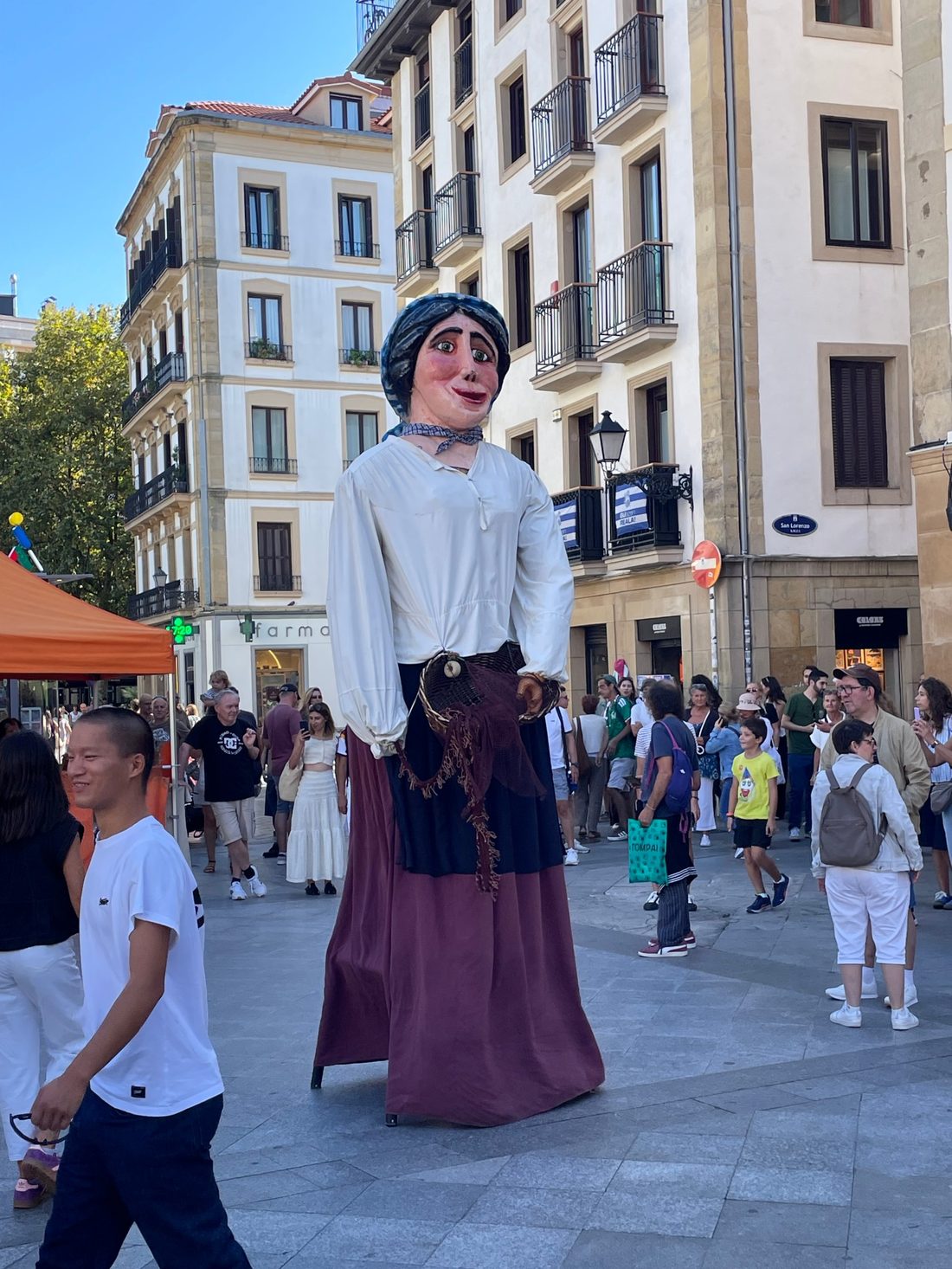
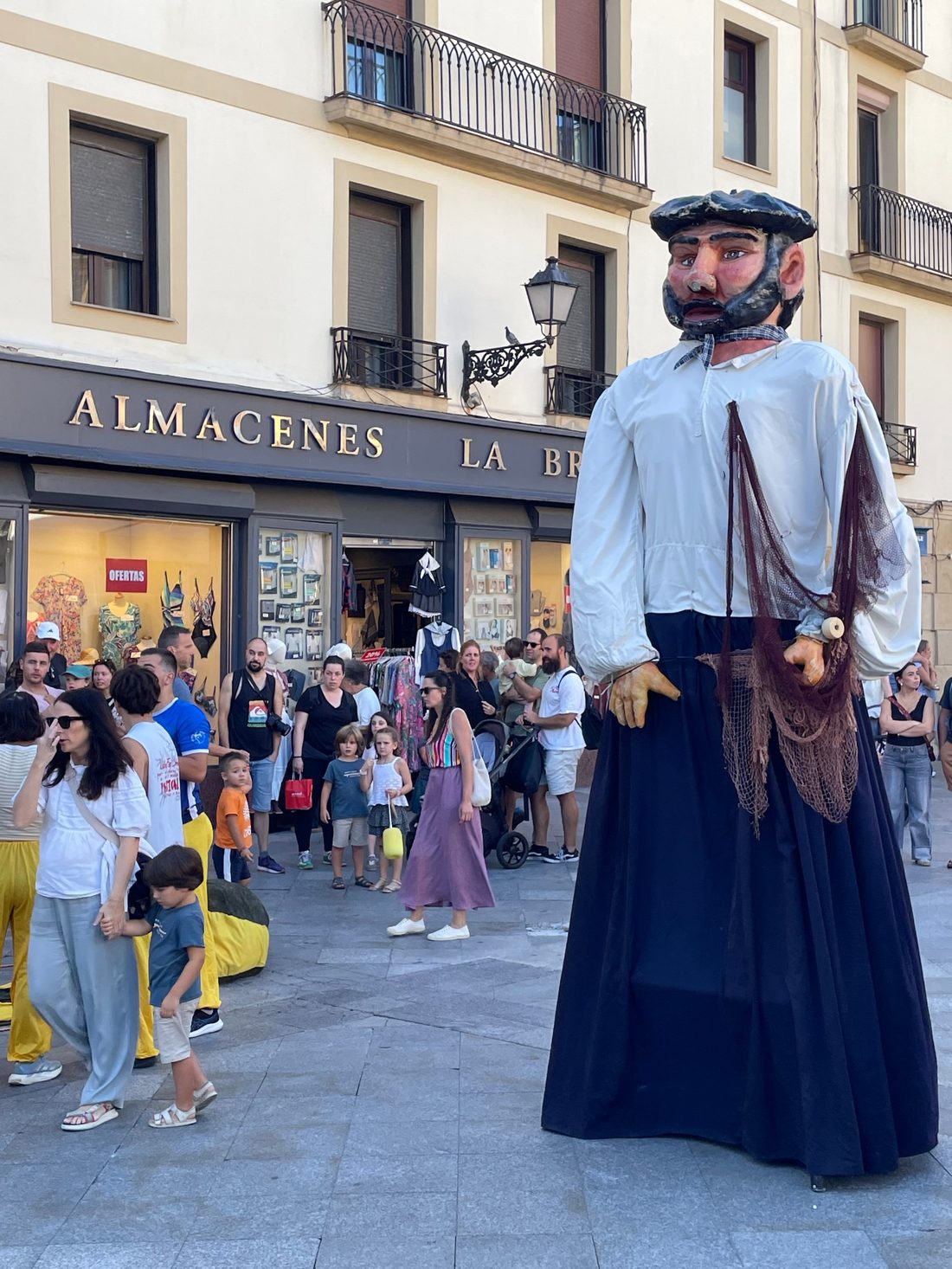
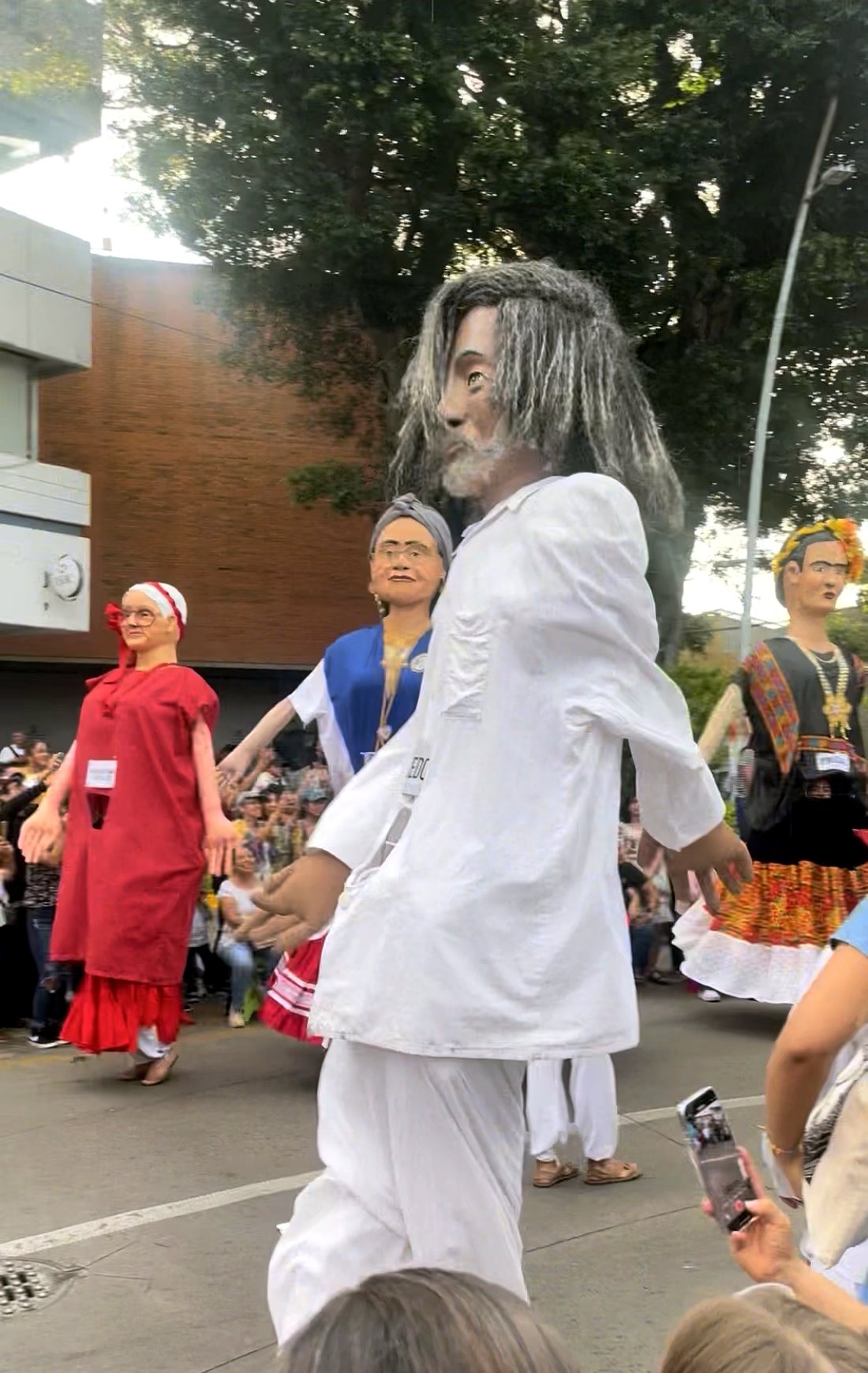
We were watching a procession in San Sebastián featuring enormous figures dressed in traditional Basque costumes. They were dancing and moving through the streets, accompanied by a group of rather mischievous-looking characters with enormous heads. These were the gigantes y cabezudos (giants and big-heads), and while the giants made their way gracefully through the crowds, the cabezudos chased children and swatted them with what looked like an inflated balloon, making a wonderfully loud noise every time it landed.
And of course, it reminded me of Oaxaca.
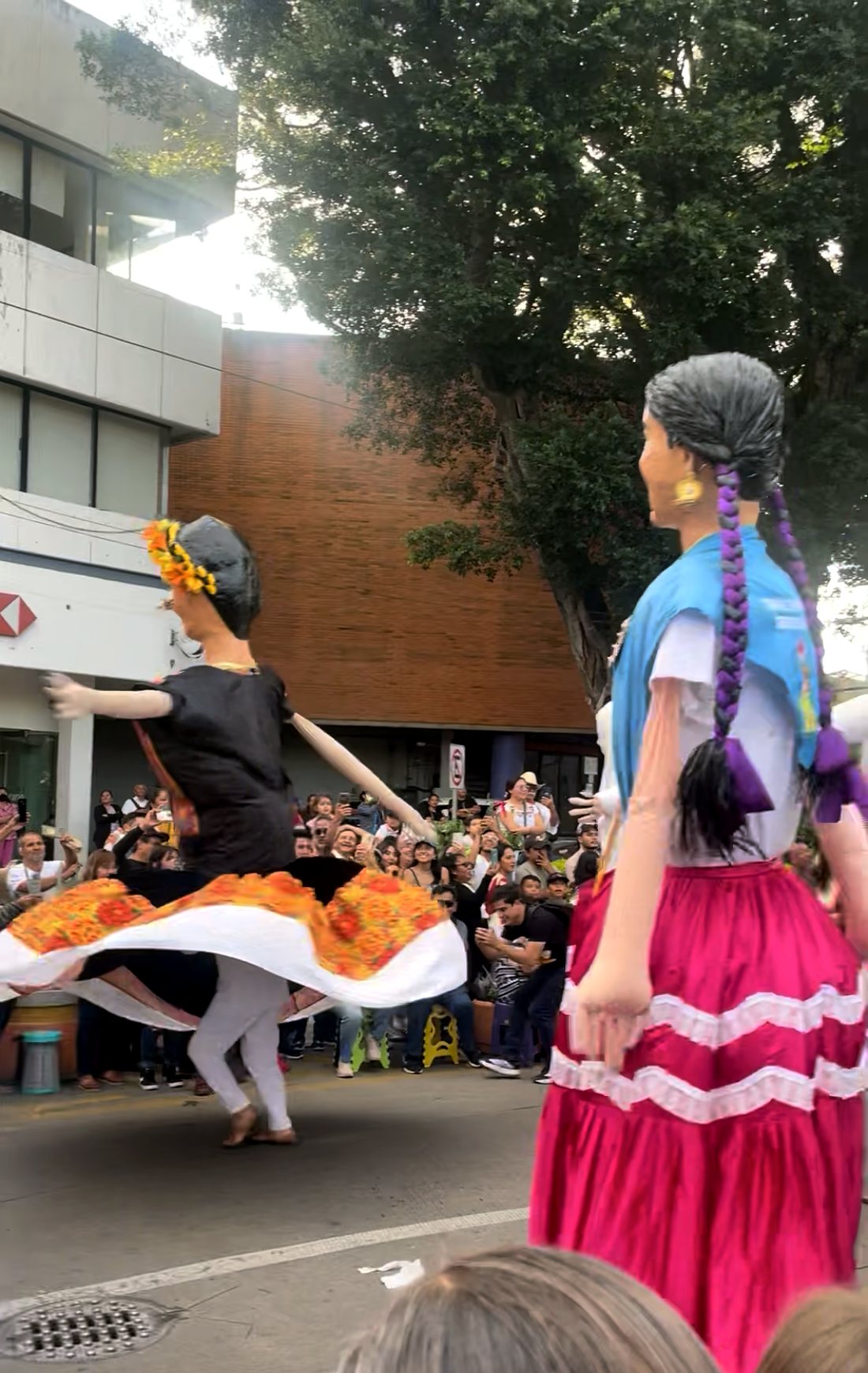
The music, the enormous dancing figures, the festive procession moving through the streets… it all looked remarkably familiar. I immediately thought of our calendas — the roving street parades that announce a celebration — with their giant monos de calenda, spinning marmotas and bands leading the way. But then I started wondering: was I actually looking at one of the origins of something we celebrate so enthusiastically in Oaxaca?
So, are we looking at the same tradition?
Well, not exactly. But there is a rather fascinating historical connection.
Giants and big-headed figures have been part of European street celebrations for centuries. In many towns they appeared in religious processions, particularly those tied to Corpus Christi. These enormous figures often represented biblical characters, historical figures or local personalities, and over time they became part of popular festivities well beyond their original religious context.
San Sebastián has its own long history with these figures. Records of giants in the city's streets date back to 1660, when they were part of a procession representing Moorish kings. The tradition has evolved over the centuries, and the city's current comparsa of giants and cabezudos, representing popular characters from the Basque provinces, was brought back in 1982. Today they're a familiar sight during the city's Semana Grande celebrations.
So while the procession I watched in San Sebastián wasn't a calenda, the resemblance wasn't just in my imagination. Both traditions share the idea of bringing larger-than-life figures into the streets, accompanied by music, movement and a very enthusiastic crowd. And that got me wondering how these figures made their way across the Atlantic.
And what about Oaxaca?
Here's where things get even more interesting. According to the Fundación Alfredo Harp Helú Oaxaca, the tradition of gigantones arrived in New Spain through European religious celebrations during the colonial period. And there is visual evidence of these figures in Mexico dating back much further than I would have expected.
A 1709 painting by Manuel de Arellano, depicting the transfer of the image of the Virgin of Guadalupe to her sanctuary, shows giant figures taking part in the procession. So these enormous characters were already part of public celebrations in colonial Mexico more than three centuries ago.
Traditions rarely travel in a tidy way. They arrive, change, mix with local customs and eventually become something of their own.
Of course, that doesn't mean we can draw a straight line from the giants of San Sebastián to today's Oaxacan calendas. But just look at what they've become here.
Today the monos de calenda are enormous handmade figures, traditionally built on a framework of carrizo (river cane), covered with paper and dressed in colourful fabrics. They dance and spin through the streets, often towering above everyone around them. Then there are the marmotas — huge spheres carried on poles — along with the bands, the fireworks and all the joyful chaos that makes a calenda unmistakably Oaxacan.
And these celebrations are no longer limited to religious festivities. You'll find calendas at weddings, graduations and all sorts of important occasions — a way of bringing people together and announcing to the whole neighbourhood that there is something worth celebrating. What may have started as a tradition brought from Europe has been adapted, reinvented and made entirely its own.
A little bit of Spain, a little bit of Mexico… and a lot of mole
Thinking about how traditions travel also got me thinking about food — because so many of the things we consider Mexican actually arrived from Spain. And in Oaxaca, is there a better example of cultural mixing than mole?
The word mole comes from the Nahuatl mulli, meaning sauce or mixture. Its roots are firmly pre-Hispanic: Indigenous cooks were using chillies, tomatoes, seeds and local herbs to build complex sauces long before the Spanish arrived.
But, as you might imagine, things changed considerably after the conquest. New ingredients arrived from Europe and beyond — cinnamon, cloves, black pepper, almonds, raisins — and gradually found their way into local kitchens, where they met native ingredients and existing techniques.
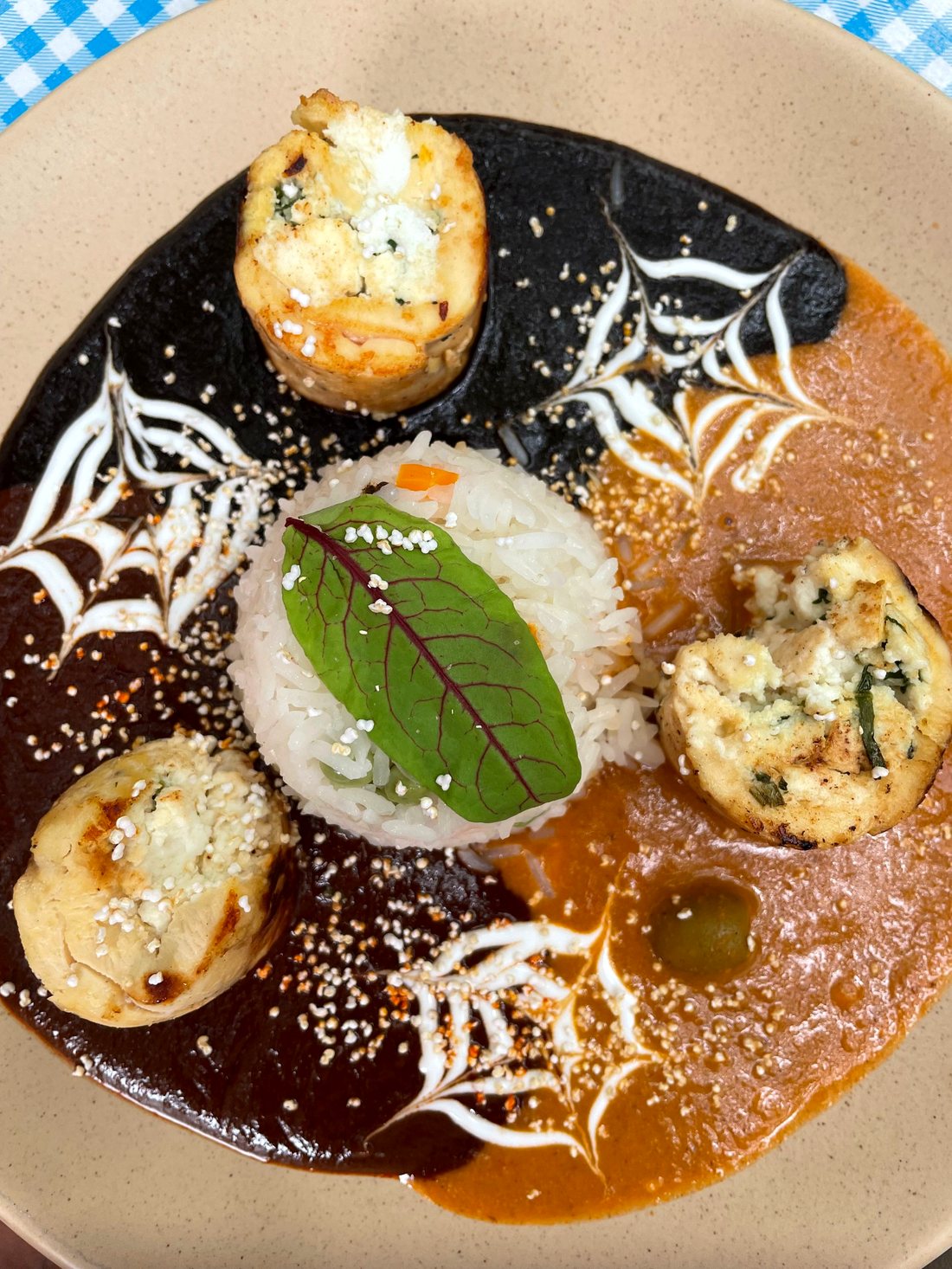
Take a traditional Oaxacan mole negro. Depending on the recipe and the family making it, it can include chilhuacle, ancho and mulato chillies, tomatoes, garlic, onion, chocolate, sesame seeds, almonds, raisins and a whole range of spices. And that's just one version. Oaxaca is famous for its seven traditional moles: negro, rojo, coloradito, amarillo, verde, chichilo and manchamanteles. Each has its own ingredients, preparation and personality — and even within the same variety, recipes can differ enormously from one cook or family to the next.
So is mole Indigenous or Spanish? The answer, like so many things in Mexican culture, isn't quite that simple. Its foundations are pre-Hispanic, but many of the versions we know and love today are the result of centuries of exchange, adaptation and creativity. Maybe that's what makes Oaxacan mole so fascinating: it doesn't belong to a single moment in history or a single culture. It's the result of many influences coming together and becoming something unmistakably Oaxacan.
The joy of recognising something familiar
I love those little moments when something I've always associated with Mexico suddenly turns up in a Spanish town, or when I catch a familiar Spanish custom in the middle of an Oaxacan celebration.
They remind me that cultures are never completely separate. They travel with people, cross borders, borrow from one another and evolve along the way. Sometimes the connections are obvious; other times you have to look a little closer. And I suppose that's one of the things I enjoy most about having these two worlds in my life — there's always something familiar to recognise, something new to learn, or some unexpected connection to discover.
After all, isn't that one of the nicest things about travelling? Sometimes you go somewhere new and find a little piece of home.